Although Mike and I were still tripping on acid, our paranoia receded as we put miles between ourselves and “the scene” at Gyro Park and Lakeshore Beach in Penticton. We fled south and now we were grinding up a narrow 2 lane road, west of Penticton, navigating the hairpins in the gathering dark, in the back of a ’52 GMC pickup. We were getting as far away from Penticton as we could, so the offer of a lift, in a truck full of hippies, was the Deus ex machina we were hoping for, and eagerly accepted. We were being spirited off to the Similkameen Vallery and the orchard town of Keremeos…while escaping the anarchy of the Big Peach and Okanagan Beach, and the youth culture mayhem that reigned there in the summer of ’72.
My high school chum Mike, and I, had left the comforts of our middle-class lives in Victoria a week earlier, to embark on a cross-Canada hitchhiking adventure. We were only 17, but in the halcyon days of the early 70’s in Canada – where nothing could go wrong – my ever-trusting & loving parents, Bob & Elsie, felt confident enough in our judgement and abilities, to drive us up the Fraser Valley and drop us at the side of the Trans Canada Highway, at exit 138 near Popkum*, on the first leg of our journey. (*Popkum, a First Nations Reserve near Bridal Falls, is a word derived from the Halq’emeylem word Pópkw’em, which means “puffballs”)
“You be safe honey,” said my mother as we got out of dad’s light green ’62 Comet, “you know that your dad & I are going to miss you.” “We’ll be OK Mom,” I assured her, “I’ll call you when I get to Calgary…and we’re meeting Shaun in 10 days or so in Kelowna.” “Look out for each other,” advised my father, as we assembled our backpacks on the side of the road, “and here’s a little something to help out,” as he slipped me a twenty. I smiled and thanked them both as we hugged goodbye. They gave Mike a hug too, hopped back in the Comet, waved, and were gone.
“I like your mom & dad,” said Mike, “they’re super nice – my dad got angry with me, and mom cried when I told them I was going hitchhiking.” “Yeah, they’re pretty good,” I replied, “they never get angry, mom’s a great cook and dad’s always cracking jokes…hey, we should grab our stuff and move to a better spot – hard for cars to stop here.”
It was July 6, 1972, and, beyond some vague notion of hitchhiking to Calgary (for no particular reason, according to my travel diary), and then meeting our friend Shaun in Kelowna, ten days hence – we were as free as proverbial birds, and at leisure to go wherever the winds blew us.
We had no maps, and quite often when catching a lift, would just give the driver our ultimate destination – in this case Calgary – in hopes of a home run. Most rides were of shorter duration and distance, but on rare occasions, home runs were hit, and we’d spend many hours – or days – with complete strangers willing to share their time, space, and life stories with two young long-haired hitchhikers.
The driver of our very first lift, when informed of where we were headed said, “Well, I’m not going that far, but I can get you beyond Hope… maybe as far as Spuzzum or Hell’s Gate.” “We’re trying to find a place to sleep tonight,” said Mike, “do you know if any of those places have hostels?” “Hope probably does,” he replied, “but you won’t find much in Spuzzum, or Hell’s Gate…they’re pretty small.”
We took the lift to Hope, and, as it was getting late in the afternoon and the driver had obligations up the Fraser Canyon, we decided to hop out at the corner of Highway 1 and Wallace in downtown Hope – figuring we were savvy enough to find the hostel on our own. “Downtown Hope” is somewhat of an oxymoron, for in 1972 it was a sleepy village of perhaps 1,000 people with a small collection of businesses and homes. Before we had wandered far, a truck carrying half a dozen young hippies, pulled up and the driver leaned out his window and asked, “Hey, do you guys want supper at the hostel?” “Sure!” we both chimed in, “OK, climb aboard,” he said.
The hostel system in the late 60’s and early 70’s was extensive and accommodating – mostly to deal with the explosion of curious baby boomers who had hit the road – but in Canada, they also provided temporary homes & work for the large number of draft dodgers who’d crossed the 49th to escape the war in Vietnam. Our driver, and most of the workers at the hostel were Americans who’d fled the draft.
Mike and I made small talk with the other hitchhikers and were soon delivered to the hostel – a collection of khaki-coloured canvas tents in a muddy field on the outskirts of town. The kitchen and dining room were situated in larger army-green field tents staffed by older long-haired hippies slaving over hot stoves and prep areas to feed the assorted 20-or-so unwashed kids. We grabbed chairs and pulled up to the long wooden dining table – which was luckily situated on a plywood floor to avoid sinking into the mud. Dinner comprised of a tuna casserole, and some kind of salad, which, according to my journal, was “made with yucky organic food.” Not terribly appreciative for a cash-strapped young man receiving a ride, a bed, and a free meal!
Although, I only gave this first hosteling experience a “one star” rating, it didn’t ultimately dissuade me from tracking down and enjoying hostels all-across Canada over the next several months. On this night however, Mike & I looked at each other, our half-eaten meals, and the rickety cots awaiting us in our drafty, mosquito-infested tents, and decided that perhaps we’d be better off taking our chances elsewhere, so we got up, excused ourselves, thanked the staff, grabbed our backpacks, and began wandering east on the Old Hope Princeton Highway which was nearby.
We threw our thumbs out as we walked, trying vainly to catch a lift, but by this time, the sun was starting to get low on the horizon and the traffic was thinning out, so we decided to look for a place to sleep for the night.
Most young hitchhikers, like ourselves, were “sleep opportunists,” trying to locate the most favourable situation for a place to sleep on a nightly basis. The range of safety and comfort was fairly broad, and over the next few months, would include, in descending order: hostels; beds in the homes of kind, generous people; the floors or couches of slightly less-kind people; abandoned buildings and construction sites; back seats, or fold-out beds in cars or vans; parks, fields, forests, and, beaches…and lastly; offers from those with hidden – or blatantly uninvited – agendas.
Hostels were definitely first choice, as they came with food, a bed, and a “scene,” and were remarkably inexpensive. Everything else could be considered “sleeping rough” but, if done with a friend was usually fun, and all part of the learning curve of how to survive while on the road.
On this night – our first night on the road – we had rejected the hostel, preferring instead to try our luck elsewhere, and, as luck would have it, wound up sleeping rough in a vacant house that was under construction a few miles down the road, east of Hope. Construction sites were preferred to fields, forests and parks, as they provided a modicum of privacy, and protection from the elements and creatures of the night. According to my journal, however, this protection did not include mosquitoes, which were “really bad, lousy sleep, 40 bites on one arm, thought they were measles.”
Our new circadian rhythms kicked in almost immediately, and on this, our first morning on the road, we got up at 6:30am due to: acute hunger, the bright, morning light streaming in through the uncurtained windows, and the discomfort of lying on a plywood floor in a thin sleeping bag without benefit of a foamy – covered in mosquito bites. No more late-night TV, queen-sized beds in climate-controlled surroundings, and fridges and cupboards brimming with readily accessible food. All habits and comforts are gone, and we are faced with the daily task of solving basic human needs and desires in new and creative ways. We loved it.
The next few days were strung together with a series of lifts from a variety of kind strangers: “a guy” to Manning Park, a “freak van” to Kelowna, “some First Nations guys in the pouring rain” to Winfield, “a farmer in a pickup truck” to Armstrong, and then, “a farmer in a truck full of cherries” to Grindrod…of which we ate our fill.
When rides weren’t forthcoming, we’d wait…and wait…or walk. It wasn’t uncommon to be stuck, cooling our heels for 3 to 5 hours by the side of the road, trying to look increasingly desperate – or harmless – to the passing vehicles. Much of the reason for these lengthy waits or long walks, was due to the glut of transients plying the highways and byways of the continent during the late 60’s and early 70’s. Lineups of hitchhikers always started on the roads exiting the hamlets, villages, towns and cities we were travelling through, so we’d join them on a first-come-first served basis. It was not uncommon to join a queue of 20 – 30 kids arrayed in groups of 1, 2 or 3 with their thumbs stuck out.
If frustration kicked in, we’d sometimes assess our location and decide – strategically – to keep walking until we arrived at a more auspicious location. Which didn’t always bear fruit. According to my journal, 5 to 10-mile walks, under the heat of a summer sun, with fully-loaded backpacks was par for the course – the effort of which would often deliver us to “nowhere”, with its concomitant uncertainty and additional waits, for two, now sweaty, dusty & ravenous teens.
“Man, I’m hungry, you got anything?” I asked Mike. “Just some jams I took from the ferry,” he replied. “Can I have some?” “Sure, do you want strawberry, peanut butter, or marmalade?” Mike had loaded up on about a dozen assorted confitures from the ferry cafeteria, which he pulled out now, as we sat on the side of the road, at Stepney Crossing and Hwy 97A, a “nowhere” between Armstrong & Enderby. I reached over and took a peanut butter and a strawberry, tore off the tinfoil covers, and devoured the contents – making sure to clean out the little plastic containers with my tongue so as not to waste anything.
We are perched on the northern edge of the Spallumcheen – a Shuswap word meaning “flat mouth”, which is a broad valley of rich farmland and rolling grasslands between Vernon & Enderby – eating pilfered jam.
In retrospect, the term “nowhere” was unfair because, in reality, “nowhere” was usually a breathtakingly beautiful spot on the road where survival (food, water, shelter), for any length of time, would’ve been impossible. If you were plunked down in “nowhere”, despite the soul-enriching visual drink of newness and beauty…you’d still have to go “somewhere” to survive. Unbeknownst to Mike and I, our next “somewhere”, our next “oasis of civilization”, was only 10 miles down the road – the hamlet of Grindrod.
Madge’s Café
“Those jams were good man, thanks, but I’m still pretty hungry, how ‘bout you?” I asked, “Yeah, we might as well keep walking…gotta be a town or a gas station with some kinda food nearby,” replied Mike, “And I could sure use a glass of water or something.” “Yeah, me too,” I said, “And those dark clouds coming down the valley, look like rain,” “Let’s go,” I said, shouldering my pack and sticking out my thumb.
We hadn’t walked far when a kind farmer in a pick-up truck slowed down, rolled down his window, leaned over, and said, “I’m only going to Grindrod, but you can hop in the back of the truck and help yourself to as many cherries as you like.” We didn’t know what a Grindrod was, but we were sold on “eat as many cherries as you like” so we thanked the driver and eagerly hopped in the back beside boxes and boxes of ripe cherries and did as we were instructed.
There’s something sublimely idyllic about sprawling out in the open cab of a pick-up truck in summertime eating ones fill of cherries. We lumbered along the Vernon-Sicamous Hwy, never out of sight of the green meandering Shuswap River – shooting pits onto passing cars – or pedestrians – as we passed through the hamlet of Enderby. I’m sure we could have put a serious dent in the farmer’s generous cherry offer, if Grindrod hadn’t arrived so quickly – recognizing this, we grabbed a few extra handfuls to stuff into our packs for later.
The farmer pulled off the highway onto a dusty parking area in front of a battered old house with a sign that read, “Madge’s Home Cooking,” as the first large drops of rain started to fall. “I have to turn off soon to get where I’m going, but I think this is a better place to drop you off, it’s looking like we might be in for a bit of a summer shower,” he said, “maybe a bit of a thunderstorm too,” he continued, pointing at the large black cumulonimbus cloud hovering overhead. “If you’re still hungry, Madge is a pretty good cook, and it’ll be a good place to ride out this storm.”
We thanked him for the lift, and his kindness, and shook hands with our cherry-stained mitts. “Oh yeah, and Madge is quite deaf, so you’ll have to speak up if you’re going in to order anything,” he said, as a large flash of lightning cut the sky followed shortly by a massive rolling clap of thunder. “Let’s go,” I shouted, as we grabbed our packs and ran across the parking lot – gaining shelter on Madge’s porch just as the black clouds unzipped, pouring out their contents onto the welcoming farmlands of the Spallumcheen.
The screen door slammed behind us as we entered Madge’s Café –a room which looked like the converted kitchen and living room of an old farmhouse, decked out in mismatched tables and chairs and decorated with collections of what appeared to be Madge’s knick-knacks and memorabilia. There was no sign of Madge – or anyone for that matter, as we were the sole customers. We grabbed a table by a window to watch the storm.
Flash! One thousand and one, one thousand and two…rumble, Rumble, BOOM! “It’s getting pretty close,” said Mike, as the lightning bolts and subsequent thunderclaps got ever closer together. Just then, we heard movement within the Café, as an elderly woman with snow white hair, a hearing aid, and cat-eye glasses, came out of an adjoining room and shuffled towards us, carrying a menu.
“Are you boys looking to eat?” she asked, as she placed a one-page menu on the table. “Yes please,” we replied loudly, nodding, remembering the farmer’s advice. Without so much as a smile or any exchange of pleasantries, she said, “Well it’s late in the afternoon, and I’m closing within the hour, but I could make you a couple of grilled cheese sandwiches…with dill pickle slices and potato chips,” she said resignedly. We looked at each other, then back at Madge (assuming it was Madge, and not her evil twin), and said, “Sure, that sounds great.” Nodding profusely. “Could we also have a couple of glasses of water?” I said, “What’s that?” replied Madge, “Water,” I repeated, as another flash of lightning illuminated the room, and a loud clap of thunder shook the building. “I’m sorry, could you please speak up? I’m a little hard of hearing.” “WATER,” I shouted, holding one hand up as if I was holding a glass, and bringing it to my lips, making the universal sign for having a drink. “FLASH! BooooooM!” said the weather, “Oh, a drink,” replied Madge, “I’ve got some cold Coca Colas, one minute,” and she wandered off towards the kitchen. “Let’s not fight this one,” said Mike, “I don’t care what we get, as long as it’s liquid and cold.”
We sat at the window, watching the heavy rain obscure the local scenery, as the lightning and thunder arrived simultaneously overhead. “Good thing we’re not hitchhiking right now,” I observed, “No shit,” said Mike, “it’s wild out there,” as a large fork of lightning hit a tree across the road, severing a large branch and releasing a flurry of leaves. “Not even safe hiding under a tree to get away from the rain…deadly.”
Just then Madge arrived with our Cokes, “Your sandwiches will just be another minute,” she said. “Thanks,” we said in unison, smiling. “Excuse me, does Grindrod have a Hostel,” I asked, slowly and loudly. “What?” “A HOSTEL,” I said forcefully, putting my hands together, by the side of my head, and closing my eyes, as if sleeping. “Hotels?” Ha ha! No, no hotels here, our little village isn’t much of a destination – you’d have to go to Salmon Arm or Sicamous.” Realizing the futility of my query I smiled and nodded. “Looks like another night of looking for a place to sleep,” I said to Mike. “Yeah, we passed a couple of empty-looking buildings on the way here, let’s wander back and check ‘em out, once we’re done here and the storm ends,” “Sure,” I replied as our grilled cheeses arrived. “Do you have any ketchup?” I asked hesitantly, shaking my hand above my plate in the universal sign for “ketchup.” “Oh yeah, here,” she replied as she reached over to another table and grabbed the ketchup, and salt & pepper shakers, and placed them on our table. “I’m getting good at sign language,” I said, as I wolfed down my sandwich.
After this late lunch/early dinner, we paid our bill and waited on Madge’s porch until the rain subsided, deciding that, rather than continuing hitching, we’d track down a vacant building for our evening’s accommodation. Luckily, Grindrod seemed to have a surplus of old rundown abandoned buildings that we could easily access.
Small hamlets – like Grindrod – went through cyclical periods of expansion and contraction since its inception in the 1880’s. In 1972, Grindrod was experiencing the beginnings of a big deflation which would see the population shrink by 58% between 1971 and 1976 – resulting in a surfeit of empty homes and buildings. Perfect places for two young travellers to rest their weary heads, smoke pot, and play cards.
Our boutique hotel for the evening was the local Community Hall that had fallen into disuse. The deciding factor was the unlocked front door that greeted us as we jiggled the handle. It was clean and dry inside but was evidently being used as someone’s storage judging by the piles of boxes, and variety of objects stacked hither and thither on the large floor space.
Mike and I were not the closest of friends in High School but had discovered each other because of our mutual interest in hitting the road and having this cross-Canada adventure. I learned that his parents were having some marital difficulties, through conversations with Mike, and what I witnessed at a family dinner I was invited to – ostensibly to be “checked out” by Mike’s parents before they sent him off on this “crazy trip” with a complete stranger – me.
Mike’s Dad – Eric – was a WW 2 military vet, with a drinking problem and some variety of PTSD. I was on my best behaviour, but Mike and I had to endure Eric’s grilling to make sure we weren’t going to “do any drugs or anything illegal” (in retrospect, sound advice), and that we should “get our hair cut” (didn’t happen) while his mother Enid got progressively weepy at the thought of her baby leaving home. As the beers disappeared down Eric’s gullet, he became less inhibited and shared some of his anger with his wife Enid, “Oh fer Crissakes Enid, stop yer weepy weepy – Mike’s a young man and can take care of himself!” pounding the table for added cruelty and emphasis. I was completely unfamiliar with this kind of family dynamic – coming from a happy, gentle, and kind home environment – and too young to understand how this could all impact the behaviour of my travelling companion. I was going to have plenty of time on the road to find out.
After a fitful sleep in the vacant town hall, we assembled our gear and headed for the highway. The storm had passed – as summer storms do – refreshing the valley with a much-needed downpour. We’d been lucky, thus far, as our rides and experiences had been mostly benign, safe & non-threatening. But hitchhiking is a crapshoot, and most young travellers – like us – had only partially-developed “protective radar” to pick up on dangerous situations that might arise, and in fact, would often embrace danger for “the thrill.”
Our first lift was with a couple of first nations guys in their 20’s who were still stinking drunk from the previous evening’s party, which just hadn’t quit. Fearless & foolish, we hopped in. “We’re only going to Sicamous,” they giggled. “That’s cool,” we replied, “anywhere north is good, we’re trying to get to Calgary.” “Oh, yeah, I been to Calgary,” said the guy in the passenger seat, slurring slightly. They were both nice guys, amicable and chatty, and all was going well until their back tire blew out about halfway to Sicamous. Despite his inebriation the driver managed to steer the car safely to the gravel shoulder. “Shit, we gotta flat,” said Johnny, the driver, while his buddy Willie, steadied himself as the car jerked and skidded on the gravel. Mike and I sat – wide-eyed – while we braced ourselves in the back seat. “You gotta spare?” asked Willie, “Yeah, in the trunk…hope it’s got enough air,” replied Johnny.
We all got out to survey the situation, while Johnny hauled the spare out of the trunk and fished around for a jack and tire-iron. “Bit soft,” he said, assessing the tire, “but it’ll get us to Sicamous.” We all pitched in and put our shoulders to the car, to stop it from leaning too far into the gravel, while Johnny worked the jack and tire iron.
After the fix, we got back in the car and continued on our way to Sicamous. “Thanks for helping out you guys, here’s a little something to calm your nerves,” said Johnny, laughing as he passed a bottle of Wiser’s Deluxe over the back seat to Mike and I – after he and Willie had taken a large swig. “Thanks,” we said, eagerly accepting an offer of free booze. “That could’ve been a lot worse Dude, if the front left had blown – could’ve pulled us into traffic,” said Willie. “We got lucky fer sure,” agreed Johnny. Mike and I absorbed this lesson about fate, circumstance and random possibilities, while Neil Young’s 1970 hit “Don’t Let it Bring You Down,” played on the radio.
Willie & Johnny were only going to Sicamous, so they dropped us off near the intersection of Hwy 97A and the Trans Canada – the easiest place for us to get a lift on our excursion to Alberta. We thanked them, said our goodbyes and continued walking east along the highway until we found a suitable spot with good hitchhiking Feng Shui.
“Hmm, nice flat spot with lots of pullover room,” said Mike. “Yes,” I agreed, “good sunny spot, away from the other hitchhikers, decent visuals, and the air smells good.” “Yeah,” concurred Mike, “and walking distance to food & drink if we get hungry.” “Perfect,” we both agreed, dropping our packs onto the gravel shoulder.
Evidently, we misjudged, as it took five hours of roadside begging before we scored a lift, and Mike was getting tired of my limited repertoire on harmonica. “Don’t you know anything besides “Room to Move?” he asked. “Yeah sure,” I replied, “how about a little “Whammer Jammer?” as I alternated between my two harmonica riffs.
And the ride itself wasn’t great (difficult to gauge these things beforehand), we wound up in the back of a pick-up truck – in the exposed cargo bed – as it got progressively colder and colder, while we ascended the western rise of the Selkirk & Columbia range on our way to Revelstoke, the driver’s destination.
Traffic slowed to a crawl as we edged slowly past the results of a nasty head-on collision near Three Valley Gap – just a few miles outside of Revelstoke – adding an additional soupçon of fear to our day, without diminishing our chill. “I think we’re getting close,” I said. “To death, or Revelstoke?” replied Mike, “I’m friggin’ frozen, and gettin’ pretty hungry.” “Yeah, me too,” I replied, “I’m wearing every piece of clothing that I brought…and we haven’t eaten much today, and it’s like, 2 o’clock.”
Blessedly, Revelstoke soon appeared, as we broke through the low-hanging clouds on our descent into the Slocan valley. Realizing how hungry – and cold – we must be after our trip, the driver dropped us off on the Commercial strip – right in front of a Smitty’s Pancake House. Wasting little time, we thanked him, grabbed our packs, and ran into Smitty’s for warmth and sustenance. Nothing like a stack of flapjacks covered in butter and maple syrup to help take the chill off.
Dutch Treat
After our Smitty’s revival, we decided to push on, rather than track down the local hostel. The sun had re-appeared, warming the day, and stoking our optimism that we could make further progress before day’s end. Within short order we got a lift with a “strange Dutchman who showed us his porno books”, and was heading to Golden, according to my notes.
Wilfred was a 50-something moustachioed man from the Netherlands who was fulfilling a lifelong dream to see the Rocky Mountains, and, for some reason, thought that showing his Penthouse and Playboy magazines to complete strangers was a good idea. As two, young, straight male virgins – who’d rarely been exposed to the almost irresistible allure of unclad female beauty – we welcomed the opportunity to look at pictures of naked women, but at the same time, were worldly enough to know that Wilfred’s offer was kinda weird. The only thing he aroused more than our libidos was our “creepy old man” radar.
The Dutch had a much more liberal approach to things that were taboo or heavily controlled in Canada – as I would discover the following year when I walked the streets of De Wallen, the Red-Light District of Amsterdam – where all things sexual were on display and for sale. It soon became apparent that his “sharing” was not meant as a come on, he thought it was funny – and we further forgave his eccentricity when he offered to buy dinner. Offers of a free meal on the road were – no pun intended – priceless, and we rarely missed an opportunity to accept.
The follow-up offer, of sharing a room at a local Motel in Golden put our weirdness radar back on high alert, but again, a free room and a bed (as long as it didn’t contain an old naked Nederlander) had appeal, and Mike & I felt confident that – together – we could handle any unwanted situation…we said yes, which according to my journal “was ok because he didn’t try anything, and he bought breakfast.”
It’s almost shocking to me now, 50 years later as I write this, to think of the level of risk taking that I was comfortable with. But, reflecting on my youthful hitchhiker balance sheet, the calculus likely went something like this: “Hmmm, we got to see pornography, two free meals, and a lift to Golden and a free bed in a motel – Bingo! Jackpot!” I’m grateful to have survived unscathed.
Wilfred dropped us off at the juncture of Hwy 95 and Hwy 1 which would take him north to Jasper and us east, enroute to Banff and Calgary. Our first ride was with a young couple from Idaho who were on a road trip, exploring BC, and their next stop was Banff – having heard much about its magnificent setting. It was comforting, travelling with a nice, normal couple after our previous day of drunks, car accidents, freezing rides and pornography. We were grateful to be riding inside the car today as we went through several snow flurries on our way through Lake Louise and Castle Junction. Franklin and Isabel were from Boise, and Franklin managed to avoid the draft due to a congenital heart problem. We shared the vistas and jaw-dropping beauty of the Rockies with this couple, agreeing to stop for photos at Lake Louise before carrying on our way to Banff. Somewhere, a photo resides in a photo album of Mike & I & Franklin & Isabel – with our arms around each other – smiling and staring at the camera, operated by a friendly Japanese tourist – with Lake Louise and the Rockies behind us, and the Fairmont Château before us.
Hashing it Out
We arrived in Banff shortly after leaving Lake Louise. As Franklin and Isabel were booked into the Banff Springs Hotel, and were heading there to check in, we asked to be dropped off downtown, so we could explore around a bit, look for food, and figure out our next moves. We got let off at the corner of Banff Ave. & Wolf St. in the heart of the tourist district – which pulses with people regardless of the season.
“Man, there’s tons of people here,” said Mike, “should we try and sell some of our hash?” “Hmmm, I dunno dude,” I replied, “seems like a lot of older tourists, or families, and I don’t really feel like wandering over to strangers to ask…seems like a good way to get busted.”
Mike and I had purchased – what we thought was – an ounce of hash from a dealer, outside a well-known dealer bar in Victoria, that we were too young to enter. Our plan was to sell a bit of hashish on our trip to help pay for expenses. I’d given Mike half the purchase price – $70 – to go downtown and do the transaction, and he returned with a small baggie, half-full of a reddish-brown, oily, granular substance that bore little resemblance to the hash we were familiar with.
We took our little baggie back to Mike’s basement room at his parent’s place to have a closer look. “This stuff looks kinda weird,” I said, eyeing and sniffing our new purchase. “Yeah, he didn’t have any Blond Lebanese,” said Mike, “he called it Moroccan Red, said it’s a different kinda high.” Of course, there was only one way to truly find out – we went to the park and tried some.
Our quality control experiment was not a raging success. “Hmm, I feel a little dizzy, how about you?” asked Mike. “Yeah, but not the kind of dizzy I like,” I replied, “also a little anxious, like that time I smoked a cigarette.” “Hmmm, maybe Moroccans mix something else in to make a blend,” pondered Mike, “Or to rip people off,” I added. We both sat under a tree in the park and pondered our dilemma. We were leaving on our cross-Canada hitchhiking trip in a couple of days and were stuck with 28 grams (now 27) of a questionable product, with an untraceable pedigree. “Let’s take it with us hitchhiking and try and sell it anyways,” said Mike. He was the brains of our organization.
As it was only mid-day we decided to carry on hitchhiking to Calgary – walking east along Banff Avenue, looking for a more favourable spot beyond the Commercial/Residential strip. We were both hungry, so I hauled out my bag of mixed-nuts, and an orange to share, while Mike dug out his remaining “La Vache qui rit” triangles of tinfoil covered cheeses, and a banana.
“When do you wanna try and sell our crappy hash?” asked Mike, with a mouthful of nuts. “I dunno,” I replied, as I peeled the orange, “we could check out the scene at the Calgary Youth Hostel. Just gotta watch out for Narcs.” We were operating without a great deal of planning, or forethought for consequences, relying almost entirely on luck and a limited palette of experience.
At this time – in the early 70’s – Alberta was not known as an especially welcoming place for young, long-haired travellers, so it was little surprise that we found ourselves walking considerable distances or cooling our heels at the side of the road for lengthy waits. The brisk mountain air was fresh and invigorating, the scenery was beautiful, we had no idea where we were, so we walked.
The commercial strip of Banff Avenue became residential and then rural quite quickly and soon it was just us, blue sky, trees, mountains, and the gravel shoulder – our constant companion. The intersection with the Trans-Canada Highway turned out to be a relatively short 3 mile hike and was announced on one of the ubiquitous green directional road signs that populate Canadian highways – right next to the poorly (or playfully) situated turn-off sign for Mountain View Cemetery and Mountain View Barbeque.
After a 3-hour roadside meditation in a valley surrounded by mountains named Rundle, Cascade, Inglismaldie and Peechee, a long-distance trucker named Ryan pulled over and offered us a lift to Dead Man’s Flats where he was delivering a load of six large wooden campground tables to Three Sisters Campground on the banks of the Bow River. Ryan offered us a lift all the way to Calgary if we helped him unload the tables, as he was travelling solo and was unsure how much support he’d get at Three Sisters. A lift to Calgary was appealing so we agreed to help, thinking that maybe we could cadge a free lunch and a ride directly to the hostel, as part of the bargain.
The trip from Banff to Dead Man’s Flats and Three Sisters campground was a short half hour drive, and soon we found ourselves parked beside one of six new campsites getting ready to unload our cargo. The Sister’s had recently decided on a small expansion to their campsite, and we were greeted by Andrew, their campground manager who was there to help unload. This was good because the tables were quite solid and heavy, likely weighing 400 pounds each and, as we soon discovered, we were not there merely to unload them, but to schlep them over to their new concrete pads. In teams of three or four (two skinny teenagers & one, or two, more robust 20-somethings) we managed to twist, slide, drop and catch the tables off the flatbed and carefully manoeuvre them to their new homes. It was heavy work, and we all quenched our thirst with water from the tap that served the new expansion.
After the job was done, Ryan got Andrew to sign his waybill, we said our goodbyes, hopped back in the truck and were off. “Hey boys, I gotta get a bit of gas at the Husky station,” said Ryan, “there’s a pretty good diner there, do you wanna grab some lunch? My treat?” Without skipping a beat, we both chimed in, “Yeah sure!” “Great thanks!”
After a round of cheeseburgers, fries & cokes – the classic – we piled back in the truck for the hour-long trip to Calgary. “Hey Ryan, we’re trying to get to the Hostel in Calgary,” said Mike, “do you think you could give us a lift there?” “Uhh, maybe,” he replied, “I don’t know where it is, do you?” Neither of us knew where it was – or even if one existed – as we usually discovered these details through “boots on the ground Q & A”. “How about I drop you off downtown? I’m heading south from Calgary – gotta pick up some farm equipment near Fort McLeod – and I can grab my connector to Highway 2 there.”
It was mid-afternoon, and Ryan dropped us off at the corner of Highway 1 and Edmonton Trail, which turned out to be a surprisingly short 20-minute stroll to the YMCA which served as Calgary’s Youth Hostel and was also near the banks of the Bow River. We checked in, left our packs and went out to explore Calgary – at least as much as we could before dinner, back at the Hostel at six.
YMCAs were notably inexpensive – 25 cents in this case- and provided substantial fare, “fish, choice of drink, soup, buns, beans, & potato,” according to my journal, and a “help yourself pot of coffee.” The Hostel was packed with “about 150 kids,” 100 of which were part of a school group down from Edmonton, the rest being travellers like Mike & I. Despite the appeal of cheap room and board, however, Mike and I were out to see the world, and didn’t find Calgary to be overly friendly toward long-haired kids like us. We received a few jeers from “too many goofs in Cowboy hats” and decided to hit the road the next morning.
Getting out of Calgary turned out to be more of an ordeal than arriving, and we wound up walking about 10 miles in 80-degree heat before finally getting a lift. It would’ve been easier if Mike had agreed to catch a bus, but he was in a bad mood and refused, saying, “I’m not paying for a friggin’ bus.” So, it was two, sweaty, thirsty kids who eventually piled into a station wagon on the southern outskirts of town heading to High River. The driver let us off near a small grocery store so we could get a few things to eat on the road, and a couple of pops to quench our thirst. We sat outside on two chairs placed near the front door, sipped our sodas and soaked in the endless big sky views of flat prairie disappearing into the horizon, dotted with grain silos and other farm buildings, and small clumps of deciduous trees. Our immediate view was a parking lot full of Ford F-150’s, and various other farm & ranching-related vehicles, with farmers, ranchers and their hands, stopping by for supplies. We didn’t feel terribly welcome by those dropping into the store, and received “looks” that felt a bit hostile, suspicious or disdainful – I wondered if it was us, or maybe we were sitting on the regulars’ chairs, where they expected to have a coffee and shoot the breeze.
Mike had never been to Alberta before, whereas my family had roots in Lethbridge, and I was aware of where we were headed and what awaited us. “I think we should head back to the Okanagan, man, how about you?” I said. “Don’t you wanna visit your Grandparents in Lethbridge?” asked Mike. “Uhh, no, it would be nice to see them, and my aunts and uncles and stuff, but we have to meet Shaun in Kelowna soon, and it’s nice to be in a place with beaches, and other kids like us…we’re heading into a lot of small prairie towns and it’s kinda rednecky,” I continued. “Yeah, I hear ya,” said Mike, “not exactly our scene here – I think it would be a bad idea to try and sell our hash to these guys!” we both laughed.
We downed the rest of our orange crushes and headed back to Hwy 2. Surprisingly, we got a ride quite quickly, not surprisingly it was with a couple of chatty “freaks” in a Volkswagen van. Our new short-term companions were gathering ideas to start a commune, or a co-operative, either in southern Alberta, or BC. They were conscientious objectors up from the States and had heard of the large successful Hutterite communes operating in Alberta, Manitoba and Saskatchewan and were now on their way to Parkland Colony, a newly established Hutterite commune. Their idea was just to drop in unannounced and ask questions. I wasn’t sure if this was the best approach for them – having some familiarity with Hutterites, from my time in Lethbridge – but I didn’t try and dissuade them. They made a hard right on Township Road 152, and dropped us off at the corner, another “nowhere” according to my journal.

If “Nowhere” had a Middle
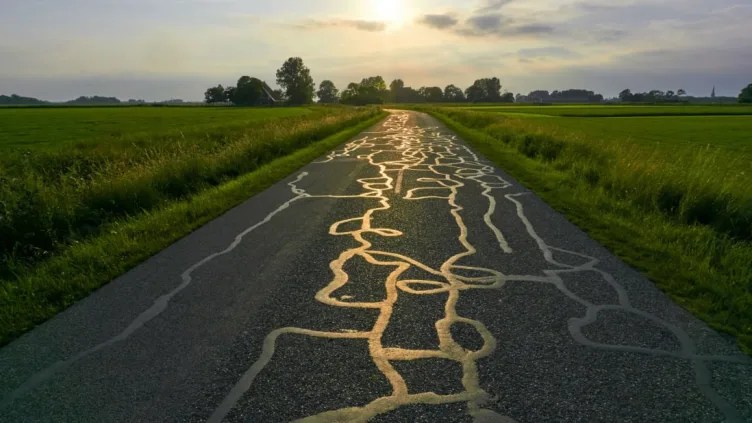
The corner of Highway 2 and Township Road 152 is not the middle of nowhere, it is its’ beating heart. If you look up “flat” or “devoid of visual stimuli” in the dictionary you will find a picture of this corner. This is not necessarily a bad thing, as it compels you to look farther, wider and deeper than might be usual, and can induce a slight state of Zen. Telephone poles and short barbed-wire fencing disappearing into the distance down dusty dirt roads, small groups of cylindrical storage buildings perched off in the distance, the long lines of wiggly tar – used in fixing winter-induced cracks in the road – bearing a vague resemblance to Arabic writing, and a thin presence of horizon-hugging Rocky Mountains, now reduced to an almost imperceptible smudge. At such moments, ones’ attention turns to the slow drift of fleecy white clouds overhead, the activities of roadside insects, the strength and direction of the wind, and the cloud of dust kicked up by passing semi-trailers.
Zen though it might be, nowhere is only good for short meditations – or as long as your supply of chocolate bars, nuts, and fruit lasts. We stuck out our thumbs.
I was deep into prairie Zen – where time has stopped – when a spotless cherry red 1965 Impala, with a loud, powerful engine, came to a stop beside us – the driver leaned over, rolled down the passenger window and said, “I can get you guys as far as Claresholm.” Without pause, we threw our packs on the back seat, hopped in, and met Darren, a local farm guy and muscle car enthusiast who was going to Claresholm for a gathering of other like-minded muscle car owners. “It’s only another 20 miles or so,” he said, “where you guys headed?” “Kinda heading to the Okanagan,” I said, “so anywhere farther south, that gets us closer to the Crowsnest is good.”
I knew this region quite well, having traveled with my folks along Highway 3 – the Crowsnest Highway – innumerable times on summer vacation road trips to Lethbridge, where they were born, to visit family. I even had distant relatives & family friends in Claresholm but wouldn’t be looking them up this go round.
When we pulled into Claresholm, Darren drove down the main drag until he found the “Lazy J Motel” where the muscle car gathering was being held. The Lazy J was part of a roadside commercial strip sharing a gas station, convenience store, Chinese restaurant, Drive-in and block-long parking lot, that was now bristling with every kind of hot rod and muscle car to be found in southern Alberta…and beyond. “I’m going to drop you guys off here, and find my pals,” said Darren, as we entered the gathering place, “be easier for you guys if you keep walking along the main drag here and stick your thumbs out – someone’ll pick you up.”
We nodded and thanked him, grabbing our packs and doing as he suggested. Mike and I had no desire to hang around and “watch the show”. The noise of 40 or 50 hot cars idling, revving, or burning rubber out of the parking lot to cruise the strip just wasn’t our thing, and not the kind of youth culture scene we were looking for – “greaseballs in their hot cars” according to my journal.
They were beer swilling, hot car cruising, short-haired & tattoo wearing, Hard Rock zealots, we were long-haired, pot-smoking, hitchhiking, Grateful Dead & Yes fixated, hippie wannabes.
Highway 2 is the main drag through Claresholm, so we didn’t have far to go – we started walking south, stuck out our thumbs, and got lucky. A pick-up truck with a driver and passenger, pulled over and offered us a ride to Pincher Creek, which was about an hour down the pike, and just off Highway 3, our route back to BC. It was a warm sunny day, so climbing into the back of a pickup and whizzing through the flatlands of southern Alberta – which although dangerous and crazy, considering that we were travelling like unsecured cargo – felt free and exhilarating.
The drive south took us past the Granum Hutterite colony, and the unappealingly named Mud Lake. We passed the junction with Hwy 785, which led to Head-Smashed-In Buffalo Jump Park, then crossed the Oldman River – named after a Blackfoot mythological figure “Napi”, who is also referred to as the “Old Man”. We veered right onto Hwy 3, bypassing Fort MacLeod, and putting us squarely on the road we’d be travelling for the next day or so as we made our way back to the Okanagan.
We stopped to pick up another couple of hitchhikers, who were languishing by the side of the road, where Hwy 2 feeds off onto the Crowsnest – a guy in his early 20’s from Mississauga named Sam, and his girlfriend Brenda. “Jesus,” said Sam, “we’ve been there for 4 hours, do you guys have any water?” We didn’t, but the driver’s buddy Walt, who overheard Sam’s request, handed him a can of beer through the open cab window. “Sorry it’s not cold,” said Walt, “just picked up a six pack of road pops before we left Claresholm…should quench your thirst.” Mike and I waited expectantly for a similar offer, but none was forthcoming, and Brenda declined.
With the noise of the truck and the wind whipping our hair in our faces it was difficult having any significant conversation with Sam and Brenda, but we were able to discern that they were also heading to the Okanagan, and then Vancouver, if time and money allowed. From my perch in the cargo bed, I was able to see Walt, through the rear window, continuing to drain one Molson Canadian after another.
Somewhere between Stowe and Chokio, we entered Piikani 147 – home of the Piikani (Peigan) First Nations people and the fourth largest reserve in Canada. Walt was the kind of drinker that mindlessly threw his empties out the window, which we watched bounce carelessly down the road as we sped along. I noticed his head starting to nod after his third beer, and, as we approached Brocket – the main community of the Piikani Nation – Walt passed out and his head smashed into the passenger window with a thud. He didn’t wake up, and it didn’t seem to faze the driver, who – luckily for all of us – wasn’t participating in Walt’s solo beer fest.
At the junction of Highway 3 and Highway 6 – a dozen more miles down the road from Brockett, and the turn off to the town of Pincher Creek – Steve the driver, pulled over to let Mike and I off as we’d expressed a desire to keep hitchhiking towards our destination along Highway 3, whereas Sam and Brenda were hungry, and curious to see Pincher Creek so they opted to continue the extra few miles due south with Steve & Walt. We said our goodbyes but let Walt continue sleeping as we unloaded our packs and wandered over to the junction looking for the best place to park ourselves.
It was getting late in the afternoon. The skies were blue, and the sun had spent the day warming the light breeze which now blew over us. A scattering of fluffy white clouds hung over the Rocky Mountains, which had, at last, come into view. In the off chance we didn’t score another ride today, Pincher Creek & food were a short 3-mile hike down Highway 6. We propped our backpacks against a metal guardrail which seemed to be protecting an enigmatic long yellow metal traffic barrier with a stop sign attached to it, which was currently in the upright position. Snow closures perhaps? cattle crossing? Police drinking and driving road check? No hippies beyond this point? We speculated.
“Do you want a marshmallow?” I asked. A young woman at the Y in Calgary had given me half a bag of the puffy sugar confections because, “She just couldn’t eat any more of them.” “Sure,” came Mike’s ever laconic reply. “You got anything else?” I inquired, “Just a can of soup, and some sunflower seeds,” he replied. “Shelled or unshelled?” “Unshelled” … “Great, let’s eat ‘em,” I suggested, “and save that soup for dinner.” Mike hauled out his half-bag of “Nutty Club” sunflower seeds and we began the process of cracking them open with our teeth, eating the seeds, and spitting the shells onto the road – while sitting on the gravel shoulder and leaning against the guardrail, in the sun – appreciate such moments of bliss wherever you find them…Life Lesson #476.
After a time, our seed and marshmallow nibbling was interrupted by an older man in a late-60’s Chevy Biscayne, who waved at us and pulled over onto the shoulder, 30 or 40 feet ahead. Mike got up and ran up to the car, as I continued eating seeds by the roadside. The driver rolled down the window, and said “Where are you boys headed?” “We’re trying to get to Penticton,” said Mike, “Well, I can get you as far as Coleman…it’s about 30 miles towards where you’re trying to get.” We threw our packs in the back seat, Mike climbed in after them, and I hopped in the front.
There’s a serene beauty to the flatlands of southern Alberta, as farms, ranches, and grain silos appear and slowly vanish into the horizon. Heading west from Pincher Creek, hills and trees slowly take control of the landscape, and the Rockies gradually rise up, giving form to destination. Our driver Vic was a widowed 72-year-old, living in Pincher Creek, heading to Coleman to have dinner with friends. Vic liked to talk, and I think that may be why he picked up two companions for the trip – a new audience for his stories, anecdotes and opinions. “Are you boys American?” “Lots of draft dodgers up here trying to avoid fighting in Vietnam,” “Yup, I was born in 1900 and had the honour of fighting in both wars…infantry in WW1…Vimy Ridge and Amiens…lucky to be alive boy I tell ya, and then stayed with the military and fought in WW2 as a Major directing our troops during the landing at Juno beach, I still have nightmares” “Are you boys hippies? “We sure weren’t allowed to wear our hair that long when I was your age” ….and on and on. Vic was cordial and chatty, and seemed to be filling a need to tell us about his life history – we nodded and made minimal conversational contributions as Vic would often answer his own questions with further questions and observations. It made the time pass as we gazed out the window.
Vic chewed a wad of gum while he talked and offered us each a stick of Juicy Fruit as we cruised past the farming hamlets of Cowley and Lundbreck. As the valley we were travelling in narrowed, and the hills and mountains of the Rockies started to close in, Vic’s conversation turned to coal. “Now we’re entering coal country boys… once coal was discovered in 1907, all the towns along here, Bellevue, Blairmore & Coleman popped up and became mining towns” ”…”God I’m probably lucky that I went to war when I did, probably saved me from becoming a miner and dying in the pit” “…yup, two of the worst mining disasters in Canadian history happened right in this valley” “Hillcrest Mine disaster killed about 190 miners… right before WW1 started in July 1914, …lot of good boys could have gone off to fight for our country” “And Frank slide, wiped out the town of Frank…killed about 90 people when Turtle Mountain collapsed just a few years after I was born” “I’m lucky my folks were farmers outside of Cowley, kept me out of the mines.”
I’d been through Crowsnest Pass and all these towns’ dozens of times on family holidays, and knew all the horror stories, but Mike was new to the area and now stared out the window, apprehensively, at the large unhealed gash in Turtle Mountain, and the several kilometre debris field of tumbled limestone rocks hugging the highway. “Shit,” said Mike, “we’re driving over the graves of 90 people, look at all those mountains up ahead, do you think they’re any more stable than the Turtle?” “Probably not,” I replied deadpan, “impossible to say, we’ve got a lot of mountains to go through, I’d say we’ve got a 50-50 chance of making it home alive.” I laughed, and Vic said, “No no no, your buddy’s just pullin’ your leg…bad mining practices back then.” “Big rockslide disasters like that don’t happen much anymore.” “Except for the Hope slide in ’65,” I chimed in. “Oh yeah, the Hope Princeton slide,” said Vic, “yeah that was a big one…only killed about four people though, I think.” “Yeah, my dad missed that one by about three hours,” I said, “he was on his way back from a meeting in the Okanagan.” “No shit,” said Vic, “lucky guy.” “Yeah,” I droned on, “not everyone gets that lucky,” as I stared balefully at Mike.
My mischievous work was done. Mike spent the rest of his trip looking at mountains with a newfound respect…and fear.
Coleman arrived shortly thereafter – Vic’s destination and our drop off spot. He let us off in front of a convenience store on the main drag – as requested – and then headed down to the “old town” to join his friends and other veterans at the local Legion, where they were having a meat draw. We said our goodbyes, shook Vic’s hand and wished him luck in the meat draw. “Watch out for rockslides!” he shouted as he drove off, “and get yer hair cut!” he added laughingly.
The Crow’s Nest
Vic had mentioned that he was unaware of any Youth Hostels in Coleman but that there was a campsite called “Island Lake Campground” about 6 or 7 miles down the road. We decided to aim for that and grabbed a few food items at the Convenience store before it closed – bread, a can of beans, a couple of chocolate bars, and some fruit, to go with Mike’s soup for dinner. It was approaching 7pm and the sun was starting to slip behind the mountains, so we threw our packs over our shoulders, and decided to hitchhike while walking toward the campsite.
The shoulder on this stretch of the highway was narrow and we could feel the full force of wind from the passing cars as they sped along, kicking up dust and small bits of gravel. Despite this discomfort, we were wandering through a stunningly beautiful section of the Crowsnest Highway, which is one of the joys of travelling by foot and thumb.
This stretch – Crowsnest Pass, the lowest point of the highest place – had always been very dear to my heart, so I wandered along in awe of my surroundings, oblivious to the traffic, just trying to take it all in. Heading west along Highway 3 from Coleman you round the crest of a small hill and find yourself in a beautiful valley, bookended by two Mountain ranges – the Southern Rockies and Mt. Tecumseh to your west, and a smaller range, with Mt Caudron and Centre Peak to the east, and, standing alone and apart from these two ranges is Crowsnest Mountain rising up from the middle of the valley like a rocky, glorious canine tooth.
Crowsnest Pass is the lowest elevation mountain pass in Canada, south of the Yellowhead Pass. Apparently, before the arrival of Europeans, Indigenous People used this major gap through the mountains for seasonal migrations, and for trade between mountain and plains cultures. 11,000-year-old Clovis Culture relics have been found around the nearby town of Frank. So, we were following in the footsteps of those that have venerated this place for countless generations
Finally, a beat-up 1960’s Volvo station wagon pulled over, driven by a young couple from Nanaimo. We ran to their car and the female passenger – Linda – said “Hey we’re just going to a campsite up the road called Island Lake, it’s not far but you’re welcome to hop in.” “That’s great,” I replied, “that’s where we’re trying to go.” We shoved our packs into the back seat and crawled in after.
Linda and Rodger had been on the road for 3 or 4 weeks – mostly travelling around BC and Alberta, sightseeing and visiting family in the Okanagan. They were friendly & talkative, hippie-esque 20-somethings, with long straggly hair, a car full of camping gear, a guitar, and food supplies. “Do you guys want any strawberries?” asked Linda, “we just bought a bag of ‘em in Lethbridge…they’re pretty juicy and sweet.” We didn’t need much convincing and stuck our hands in the bag pulling out fistfuls of berries, munching contentedly as we travelled the last few miles to our destination – following a brackish trickle of the Crowsnest River, beside Crowsnest Lake, in sight of Crowsnest Mountain, below Crowsnest Ridge, within Crowsnest Pass, while travelling along Crowsnest Highway.
“We’ve never been here before,” said Rodger, “It’s quite beautiful…are these places actually named after a crow’s nest?” “No,” I replied – deadpan – as I stared out the window, with my red-stained lips and fingers, as we slipped between the rows of deciduous trees and conifers which hugged the road between the granite outcroppings. After a suitable pregnant pause, I laughed and said, “Just kidding! Yes, yes they are! they’re named after a local first nation’s word – that I can’t remember – meaning “nest of the crow, or raven…I don’t think they differentiated much between crows or ravens.” “Hmm, cool, thanks,” said Rodger, “I can understand why they’d lump them together; ravens are just like big crows…except for the squawk.” We all reflected on this as Mike ate the last strawberry.
Shortly after passing the entrance to the Crowsnest Lake Bible Camp, and a sign warning us of Rocky Mountain Sheep, Linda said, “There’s the sign, Island Lake, hang a right.”
There was a large, cleared parking area beside the lake, for trailers and camper vans which was fine for Linda and Rodger as they were sleeping in their station wagon. Mike and I thanked them for the lift and grabbed our gear before wandering down the gravel road to the tent sites, where we could pitch our little one-man tents. The tent site was nearly full, but we found a spot near the lake between a young family of four, and a woman camping with her dog. We set up camp and said hi to the neighbours. It was already after 8pm and dusk was settling fast. The children were exhausting the last of their daily allotment of noisy pursuits and playtime activity, while Mom & Dad cleaned up the dinner dishes, drank beer and prepared for bed. The single woman sat at her wooden picnic table drinking beer and alternating between playing guitar and petting her dog. Her name was Christy, and her dog was a young, energetic, and seemingly untrained Jack Russell Terrier, named Willy.
We were both hungry and decided on a dinner of soup, bread, and a couple of oranges from our limited stash. Mike carried a small aluminum pot for cooking, and Christy allowed us to heat up our soup on her dwindling fire, while I fed pieces of bread to Willy – which he voraciously accepted. Christy & Willy were up from Seattle, just taking a few weeks off to chill out and escape the edgy anti-war/pro-war battle being waged in the U.S.A. She was heading to Saskatoon where her boyfriend – a conscientious objector – was working in a Youth Hostel, until the war ended and he could, hopefully, head back and join her.
“Do you guys’ smoke pot?” asked Christy, “Sure,” we both nodded from fireside as I stirred the soup. “I feel like getting a little high, and you’re welcome to join me if you like.” She pulled a doobie and a lighter from her guitar case and lit up. We put our cooking activities on hold for a moment, to join her at her table. A waxing gibbous moon rose slowly over the southern mountains that rung the lake, catching a light orange hue from the sun which had now disappeared over the western range.
There couldn’t have been a more tranquil setting and moment in time to enjoy relaxing after a long day’s journey with a few friends smoking a joint. To be 17 and carefree, camping, on a lake, surrounded by glorious mountains, with the moon and stars gradually showing themselves – with a few marshmallows hidden in the backpack. But I was still finding my way with pot, and the experience was not always benign. Rather than enhancing the serenity of the moment, I was often removed from “the now” and sent to a place of distracted teenage angst – trapped in my head.
It’s likely we were all trapped in our heads, but the inside of Mike and Christy’s minds were now completely foreign places to me and conversations became disconnected elsewheres – the only solution of which was to giggle idiotically. As I’d been experimenting with pot since the age of 14, I was getting used to this routine and, to fit in, just rolled with the experience.
Luckily, music provided something we could all focus on collectively, so when Christy asked if we minded if she played her guitar, we both smiled and said, “No, no, what kinda tunes do you play? “Mainly Folk stuff, I guess,” she replied. She pulled out a relatively new Ovation with its Lyrachord pear-shaped body – which we’d never seen before – and started singing an Emmylou Harris’ version of Bob Dylan’s “I’ll Be Your Baby Tonight”. She had an angelic voice and decent guitar chops and soon we were back in the moment. Willy was familiar with this routine and drifted off into a contented slumber near the waning fire. Mike and I both wondered if she was singing the song directly to us.
“Hey man, we should eat that soup,” said Mike. “Oh, jeez yeah,” I said, returning to the present moment and my gnawing hunger, “I forgot.” “Keep singing Christy, you sound great,” I continued, “we’re just going to grab the soup and move over to our table where all our stuff is…do you want any soup?” “No thanks!” she laughed, “I’ve already eaten and just feel like plunking on my guitar…when I get high, all I wanna do is play music.” That was fine with us, there wasn’t much soup, and her folksy ballads provided a sweet soundtrack while we ate.
It had been a long day. By the time we finished inhaling all the food that we’d purchased, and the last remaining stash of marshmallows, it was dark, and we were dog-tired. We waved to Christy, thanked her for the tokes and the tunes, and headed off to our separate one-man tents. The last thing I recall is drifting off to Christy’s gentle rendition of Carole King’s “You’ve got a Friend”. Bliss.
We woke the next morning to barking, sounds of a crying child and the raised voices of adults – one of them Christy’s. “Oh Gosh! I’m so sorry!” “Willy doesn’t usually bite, but I guess your son came over to our campsite and it startled him…he was just being protective,” said Christy. “Waaah,” cried the little boy, who was about five. “If your dog bites, it needs to be trained not to,” said the angry father. “You shouldn’t have a dog in a public campsite that can bite people,” yelled the even angrier mother, “it should be tied up!” “I’m really, really sorry,” continued Christy, “that’s never happened before, it looks like Willy just nipped him and didn’t break the skin.” “I’ll get him back in the car and we’ll head out.”
That last comment seemed to placate the angry parents, and the hubbub subsided. Mike and I crawled out of our tents and saw Christy hastily assembling her camping gear. While the parents in the adjacent site comforted their little boy, Christy asked us, “Hey you guys, as you probably heard, I have to go, Willy nipped their little boy – do you want my eggs?” She pointed at a frying pan with two over-easy eggs nearly cooked, beside some fried bacon. Who could resist? We hauled out our plates and she scraped it into equal portions for both of us.
“I would’ve liked to stay for an extra day,” she said, “but I don’t want a repeat of this morning,” “Dogs…love ‘em, but you just never know what can set them off.” She hopped in her car, with Willy sitting in the passenger seat, poking his head out the window, smiling with his tongue hanging out, and they were gone. We set about eating our unexpected breakfast and pondering our next move. “I think Willy was just protecting the bacon,” said Mike, “I might’ve bit that kid too if I saw him heading for my bacon.” We both laughed.
We cleaned up, broke camp, skipped a few rocks on the lake and headed back to the Crowsnest Highway to continue our journey. The intersection of the park access road and Hwy 3 seemed like a good hitchhiking spot as there was ample shoulder for cars to pull over – and it was a beautiful place to be.
Doukhobor Jam
We didn’t have to wait long. Our first ride offered to take us all the way to Castlegar, which was over 250 miles and would get us about halfway to Penticton. Peter was a greying middle-aged man driving a burgundy mid-60’s Pontiac station wagon, with a cargo area and a roof rack loaded with boxes, and tarped items. “You’ll have to move some of those boxes over, to make space on the back seat there,” he said, as Mike prepared to squeeze our packs and himself into the crowded space. “Sorry for the clutter,” he said, “I hope it’s not too uncomfortable.” “No problem,” replied Mike, “we’ve had worse!” We settled in for the five-hour trip.
After answering obligatory questions about ourselves and our hitchhiking adventure, I asked Peter if he was moving to Castlegar. “No, I live there,” he replied, “I do some volunteer work at the Doukhobor Village Museum there, and I’m bringing some antiques and artifacts from Veregin Saskatchewan to expand our display.”
“That’s cool,” I said, “are you a Doukhobor?” “Yes,” he replied, “born and raised.” “My parents came over from Russia with my grandparents in the early 1900’s, to get away from Russian persecution, and settled in Saskatchewan” “Yeah, my Swedish and Scottish grandparents came over around the same time, but I don’t think they were persecuted,” I said, “I think they got land grants from the government and settled around Lethbridge and became farmers.” “My English great-grandparents came over in the mid-1800’s,” said Mike, “and worked on the railway.”
“Yeah, the Canadian government was very generous to our community too,” said Peter, “there were about 10,000 of us who came over from Russia, and they gave us a lot of land in Manitoba and Saskatchewan. My parents settled around Veregin – where I picked up all this stuff.” “Did the government pay for everybody’s trip over?” asked Mike – who’d never heard of Doukhobors before stepping into this vehicle. “No, we got kinda lucky,” said Peter, “there were people who believed in our cause and raised money for our trip over – Quakers, Anarchists, even Leo Tolstoy* donated the royalties from his last book…and that’s a lot of one-way tickets!” he laughed. (*A statue of Tolstoy was donated by the “Rodina Society for Cultural Relations, Moscow”, former USSR, and erected in the Doukhobor Discovery Centre in Castlegar in 1987)
I knew a little bit about Doukhobors, having driven through their communities in the Kootenay’s every year with my folks on our way to Alberta. I knew they made good jam, as we would always stop and pick up a few jars from their roadside stands, on our yearly trek. I knew they were a religious, communal group, and generally pacifist – except for “The Sons of Freedom”, a splinter group that had a reputation for violence, and a proclivity for protesting nude on the steps of the Vancouver courthouse.
Time passed and we learned a great deal about the Doukhobors and the Union of Spiritual Communities of Christ, from Peter, our personal tutor and tour guide. We followed their story as we passed by their villages, farms and homes dotted along the Crownsnest Highway throughout the west Kootenays, all the way up to the hamlet of Brilliant, which was just across the river from Castlegar. Brilliant was purchased by Peter Verigin in 1908 to get away from problems they were having with the federal “Dominion Lands Act” in Saskatchewan, which required these communal-farming spiritualists to give up communalism and own land individually. Brilliant became the Doukhobor headquarters for Canada and is where Peter – our driver – lived now.
“OK my friends, it looks like we are almost there,” said Peter as we rounded the last hill above Castlegar and began our descent into the valley. “I’ll take you across the river and drop you near the access to Highway 3 so you can carry on with your trip.” “Great thanks!” we said, “is it possible to drop us near a grocery store so we can pick up some food?”. It was about 1 pm and we were both hungry. “Sure, there’s a mini mall with stores and restaurants…you’ll find something there, and it’s a short walk to the highway.
As we were exiting his car at the recommended spot, Peter reached into one of the boxes on the back seat and pulled out two jars of cherry jam. “Here’s a little something for you,” he said, “my wife made these.” We accepted his kind gift as graciously as two 17-year-old boys could – by salivating, I think – and said our goodbyes, as he sped away with his precious cargo of artifacts.
We grabbed some additional supplies form a nearby store to make an impromptu lunch (bread & cheese…with a little bit of jam) and extra food for later (bread, cheese, with a little bit of jam) – in case dinner at a hostel in Penticton didn’t materialize. A short stroll up the hill got us back to the Crowsnest, and soon we were plunked alongside the highway with our thumbs out, taking time to assemble cheese & jam sandwiches as cars, trucks & motorbikes went speeding by.
As it turned out there was no need to wolf down our sandwiches as rides were slow in coming. This wasn’t a huge concern as the weather, and the valley we were in, were beautiful so it felt good to enjoy our humble food, take in our surroundings, and relax after our 5-hour trip. “Y’know, that Peter was pretty convincing, I think I’m going to join the Union of Spiritual Communities of Christ, and become a Doukhobor,” I said, lazily, as I chewed on a piece of grass. “Are you still stoned from last night?” asked Mike, laughing. ”Ha ha! no,” I laughed, “no religious organizations for me, but I do like the idea of living communally, and I liked their rebellious beginnings, and pacifism…but in the end, they just created their own restrictive organization which – according to Peter – broke into several groups.” “How about you?” I asked. “No, I didn’t like Sunday school as a kid and have no desire to go back,” he replied. “Yeah, me too,” I concurred.

Anarchist Mountain
Just as we were airing out the youthful beginnings of our lifelong attempt to understand religiosity and spirituality, a bright green Volkswagen hippie van, with Quebecois licence plates, pulled up just ahead and the front seat passenger rolled down his window and shouted, in heavily accented Québécois French, “‘Ay, where you guys goin’?” “Trying to get to Penticton,” I hollered back. “OK, dat’s where we’re goin’ too, ‘op in.” We gathered up our stuff, ran towards the van, threw our gear into the open side door and climbed in.
“Thanks,” we both chimed in. “I’m Jean Claude and dis is Saul,” said the passenger. Saul waved and said, “’Eh, what’re your names?” “I’m George and this is my buddy Mike,” I replied. “Hey,” said Mike. There was another young couple, Andrew & Martha, already riding in the back, having been picked up in Salmo earlier that day. Everybody had long hair, wore at least one article of clothing made of faded denim, patches & beads were an optional fashion statement, and sandals, flip flops or beat-up sneakers were standard footwear. After many days on the road, we’d found our tribe.
Jean Claude and Saul hailed from Chicoutimi and had been on the road for about 10 days, “Comin’ out to BC and ‘splorin’ Canada,” and Andrew and Martha were two young hippies from Wisconsin, basically doing the same thing. In fact, we were all basically doing the same thing – leaving home, heading out, and “’splorin’.” Having adventures as long as time and money would allow.
Conversations revolved around travel experiences – places to go and places to avoid – and details of our personal lives and situations, as none of us had ever been to each other’s Provinces, States or hometowns. Musical preferences, the situation in Vietnam, and recommendations for good weed or hash varieties also peppered our conversation. With this last topic Mike & I looked at each other and subtly shook our heads, deciding that it wasn’t the right place to try and sell our hash.
We didn’t have much time to get to know Andrew and Martha as they were only going to Christina Lake – about an hour’s distance – to visit Andrew’s brother, a draft dodger living on a commune near there. The entire trip along this southern highway offers nothing but splendor and beauty – if you exclude Trail of course, which, at that time, was one of the most polluting zinc, lead & germanium mines in the world, surrounded by a 10-mile radius of toxic death…otherwise, enjoy!
As we rounded the corner, above Christina Lake, Saul let out a deep breath and exclaimed, “Jesus, Jean Claude, Look at ‘dat!” “Dat’s why we drove ‘dis far man.” Blue skies, low-lying tree clad mountains, and a broad beautiful lake greeted us, so Saul took advantage of the vista and pulled over onto the Christina Lake Viewpoint, so he could take some photos. “’Ey, why don’ you all stand over dere togedder and I get your picture?” We assembled as requested, arms around shoulders, smiling – a moment in time, now sitting in a photo album on a bookshelf in Chicoutimi.
We all piled back into the van after Saul had managed to take a few photos with his old Minolta SR-2. “It’s an old camera ‘eh, I got it secon’ han’, but it take real good picture,” said Saul. “Saul, ‘e’s a good photographer y’know,” said Jean Claude, “’e got one of his photo in a magazine.” We all oohed and awed about this accomplishment, but the conversation was cut short when Christina Lake Village, and the gas station where Andrew & Martha had arranged to meet Andrew’s brother, appeared soon after.
Saul pulled over in the parking area, and we all got out to say goodbye to our Wisconsin friends, stretch our legs, use the washroom facilities, and pick up some snacks in the convenience store which was attached to the gas station. As Andrew and Martha, wandered over to the Ford F-150, which was idling nearby, waiting to pick them up, another young couple – who’d been hitchhiking nearby – ran over with their gear and said, “Hi, are you guys headed to the Okanagan?” Jean Claude replied, “Sure are, we’re goin’ to Penticton, you need a liff?”
We all hopped back into the van and, as we were pulling out of the gas station, Jean Claude noticed another single hitchhiker and hollered out the window, “Ey! We’re goin’ to Penticton, you wanna ride?” Happily, the solo trekker, gathered his stuff, threw it in the van and crawled in. “Thanks!” he said, wiping the sweat from his brow, and tucking his long straggly hair behind his ears, “been there for a while, and it’s getting kinda hot.”
With seven people now in the van, and temperatures reaching a summertime high, we were all feeling the heat – languidly sucking in whatever fresh air we could through windows, that often only opened a crack or slid halfway on these 60’s VW Microbuses.
We rolled through Grand Forks, which also had Doukhobor heritage, so Mike & I were now able to converse – almost intelligently – with our new travelling companions, about this aspect of West Kootenay history, after our five-hour tutorial, earlier that day, with Peter.
We climbed the summits and wound our way past the ranches and villages on this portion of the Crowsnest Highway that hugged the 49th parallel – sometimes within a few short miles of the American border. We tumbled into the Kettle Valley, and over the Kettle River where hobby farmers struggled for adequate water supply due to proximity to the arid Okanagan climate.
We pulled into the quirky little hamlet of Bridesville just to have a look, because Saul thought the name was funny, “Eh, man, let’s pull in ‘dere, Brideseville, maybe we’ll find one for you! “Dat would make yer mom so ‘appy!” he laughed.
The tour was brief. Bridesville’s main drag is its only street – one long block of escapist cottages, broken auto & appliance collectors, and a disproportionate gaggle of hoarder shacks. The settlement was originally called Maud, in honour of the first Postmaster’s wife – hopefully, Maud was more attractive than her namesake. “Oh man!” laughed Saul, as we prepared to exit Bridesville, “I don’t ‘tink you want a bride from ‘dere, maybe we better start lookin’ in “Girlfriendtown” first!” we all laughed. “I’m gonna start in Penticton,” replied Jean Claude, “where ‘dey got ‘da beach and ‘da bikini!” Everyone laughed.
We were now on the home stretch – the last bit of the Crowsnest, hugging the slopes of Anarchist Mountain, before the breathtaking descent into the Okanagan Valley. Rounding the first switchback gave us a brief glimpse of distant mountaintops and the depth of the valley below. By the second switchback hints of Osoyoos Lake appeared and everyone’s mood and anticipation rose. By the third switchback – the first of two hairpin turns, and a designated lookout pullover – we stopped to savour the view and allow Saul to take a few more photos. “Oh man, dat’s sure beautiful, eh?” said Jean Claude. We all nodded, staring at the view which never grows old.

Emergency pull-off lane for trucks suffering brake loss, or, photo op for forlorn-looking hippie kids
Continuing on after this soul-satisfying pit stop, we rounded the second hairpin turn – Anarchist Mountain Lookout – which is so tight it’s only accessible to eastbound traffic. “Jeez man!” said Saul, “what’s wit’ all the Anarchist stuff, eh? It says, “Anarchist Lookout!” (he said with humorous emphasis) “is ‘dis sometin’ we gotta watch out for?” “Ha ha! No,” I replied, “I think it’s named after a prospector in the 1800’s who thought he was an anarchist. I’ve heard he used to go around with a stick of dynamite in his boot.” “Dat’s not anarchy,” said Jean Claude, “dat’s crazy!” “No shit!” I said, as everyone chuckled.
Now we were in full descent into the valley, just above the town of Osoyoos. It was pushing 6pm and it wouldn’t be long before the sun started to sink below the eastern mountains – sunset comes early to these mountain valley villages. As it turned out, the young couple we were travelling with – Aggie and Bruce – decided to get off in Osoyoos, as they were hungry, and felt like taking a day or two to explore this hot, beachy town before going further north. We dropped them off on the main strip within easy access to food and beaches, wished them well, and were off.
Within a few short blocks we also said goodbye to The Crowsnest Highway, veering right onto Hwy 97, for the rest of our trip north. “’Eh George, ‘joo know how much longer is it to Penticton?” “Yeah, I think it’s about an hour,” I said, “if we don’t need to stop.” “Naah, we got gas, and a little bit of food to get us ‘dere,” said Jean Claude, opening a bag of Old Dutch potato chips. “Anybody like a chip?” We all took turns, eagerly reaching in and grabbing a handful.
Our other travelling companion – Andy – was also 17 and just taking a bit of the summer off from his home in Edmonton to explore BC. He was intending to meet a buddy in Penticton to hang out and continue hitchhiking together from there. Our new Quebecois friends were now on a mission to complete this part of their trip, and get to Penticton so they could park, sit on a beach, take off their shoes, put their feet in the warm sand, and drink some beer. These sounded like admirable goals, and we all planned to emulate them in similar fashion.
We were travelling now through Canada’s fruit basket. Small farms, orchards, and roadside fruit stands line the highway between Osoyoos and Penticton. The only thing slowing us down was the occasional John Deere hauling a load of fertilizer, fruit, or equipment – and the difficulty passing on this two-lane highway during the busy summer months. “Jesus!” said Saul, as he tried to peer around the tractor, looking for an opportunity to pass, “doesn’t ‘e know ‘dere are chicks and cold Labatt’s waiting for me on a beach in Penticton?” “Not sure if there are any chicks waiting for me,” I said, “but I know there’s a cheese sandwich with Doukhobor jam, with my name on it.” We all laughed.
We squeezed through the town of Oliver, hugged the shores of Vaseaux Lake, hung a hard left in downtown OK Falls, and made the final descent of our day’s journey onto the Skaha Lake beach area – the southern portion of the Penticton land bridge. “Once we get over the canal, you guys can drop me anywhere along Skaha beach,” said Andy, “my buddy’s been sleeping under the bridge, and hangs out on the beach there,” “Hey yeah, we might as well get off there too,” said Mike, “unless you wanna join us on the beach.” “Oh ‘tanks you guys,” said Jean Claude, “it’s been fun but I ‘tink we’re gonna cruise around a bit, find some ice and beer for ‘de cooler, and grab some food, Tabarnak I’m ‘ungry!”
We three hitchhikers all piled out at the closest parking area, shook hands, and said “Au Revoir” to our new Quebecois buddies, slung our packs over our shoulders and wandered down to the nearby beach.
It was approaching 8pm and although the light was waning, the air remained hot and dry on this mid-summer Okanagan evening. The vista looking over Skaha Lake from Skaha beach was as beautiful and embracing as a warm hug. We took off our sneakers to walk barefoot in the sand. “My buddy Eddy should be along here somewhere,” said Andy, “I just talked to him on the phone yesterday.” We wandered past families with kids wrapping it up for the evening, and young couples just settling in on blankets for picnics and romance. Soon, Andy spied his pal and waved. “Hey Eddy!” Eddy was sitting on the sand with another couple of straggly-haired teens, passing around a bottle that appeared to be hard liquor. “Hey Andy! Grab a seat,” he said, “we’ve got some booze.” Our ears perked up, we smiled ingratiatingly and joined the circle.
“This is George & Mike,” said Andy, “we’ve been stuck in a hot van since Christina Lake.” Everyone nodded amicably, hands were shaken, the bottle was passed, and we all took a swig. “We don’t have any booze to share with you guys,” I said, “but anyone like a cheese sandwich?” “Sure thing,” said Andy, “I haven’t eaten since Christina Lake…and I wanna try the Doukhobor jam thing.” “Doukhobor jam?” inquired Eddy, “they make great jam. If you’ve got some, I’ll have a sandwich too.” The other two companions declined, and I began making sandwiches for four, while the bottle continued making the rounds.
Sandwiches were eaten, the bottle of Canadian Club was downed, and the moon appeared, continuing on its path to fullness, casting much light over the yellow sandy beach. Playful couples dashed from their blankets, running, splashing and diving into the Lake. “Man, that looks like fun, I’m goin’ in!” shouted Andy, as he stripped down to his skivvies and ran into the water. Mike and I decided to join him, feeling a need to get the last few days of road dust, heat, and sweat off our bodies, and Eddy ran in naked because that’s what slightly drunk teens like to do.
Back on the beach, we hauled our little towels out of our backpacks and dried off. Our circadian rhythms were adjusting to life on the road, and we found ourselves getting tired shortly after sundown and waking refreshed and full of energy at the first hint of daylight – which was around 5:30 or 6. “I’m thinking of calling it a day,” said Mike, “I think I’m just going to find a quiet spot on the beach and sleep.” “Yeah, me too,” I said, “it’s been a pretty long day.” “The cops don’t let people sleep on the beach,” said Eddy, “they’ll be coming around to check. You guys should join us under the bridge…it’s sandy and they don’t bother us there.” “Sounds good,” we agreed, “lead the way!”
The other teens from our circle, who hailed from Toronto, declined and decided to hitchhike downtown to “see what was goin’ on,” while we assembled our stuff and followed Eddy up the beach, to check out our new accommodations under the bridge.
Just what exactly goes on, “under a bridge?” From childhood fairy tales, we know that a fearsome and ravenous troll lives there, waiting to devour all those who try to pass. In the current era, sleeping under a bridge connotes homelessness, drug addiction and despair. Although we were transient youth, we were not “homeless” per se, but out searching, seeking and exploring – we all had good homes to return to anytime we wished. And none of us were drug addicted or despairing – yes, we liked alcohol and the occasional joint – but it was all still experimental and fun, and not atypical of teens our age across North America. But under this bridge we would get a glimpse of what was to come – our first whiff of the fearsome and ravenous troll of addiction in the shape and form of two young guys from Vancouver – Barney and Zac.
It was still light enough to see, with twilight and our three-quarter moon. We followed the path at the end of beach until we were all standing under the bridge, looking for a place to park ourselves on the sand for the night, when we noticed two other young guys sitting about 20 feet away passing a plastic bag, with a small amount of liquid in it, back and forth, placing the aperture over their mouths, and inhaling deeply. “Oh, heya Eddy,” slurred Barney as Zac inhaled from the bag, “D’you wanna try some?” “Naah, I told you guys yesterday I don’t do that stuff,” replied Eddy tersely. “How ‘bout you guysh?” slurred Zac turning to us, as he removed the bag from his mouth, “Itsh good shtuff. Itsh not glue, itsh Cutex, doeshn’t fuck you up like glue.” “Uh…no thanks Dude,” “Not for me thanks,” “Nope,” came the quick and firm replies from Andy, Mike & I.
Even at our young age, there was a definite hierarchy forming amongst people who liked to experiment and get a little high – and “sniffers” were definitely at the bottom of that class structure. “Sorry guys,” said Eddy, “I forgot to mention these dudes, they’ve been coming here for the last couple of days, are you still ok crashing here for the night?” Mike and Andy and I looked at each other and agreed that it should be ok – especially now that our inhaler neighbours appeared to be nodding off, or in some state of oblivion.
We hauled out our bags and assembled ourselves as far away from Barney and Zac as possible, and passed the night in a fitful sleep, waking at the slightest sound and looking over to make sure they were still unconscious…but breathing.
Oftentimes, “free” is not worth it. We woke with the first hint of light and were able to look at our surroundings more clearly. Barney and Zac were still passed out, but now we could see the detritus of many previous transients who’d taken advantage of “The Bridge Resort & Spa.” Let’s just say, that it was in the days before recycling, or regular trash pick-up in such places, by the City of Penticton. “Let’s get out of here dude,” I said to Mike, “this place sucks.” “I hear you man,” he said, zipping up his sleeping bag and assembling his pack. Andy & Eddy lifted their heads and gave us sleepy goodbyes as we headed back towards the beach. “You guys should go check out Okanagan Beach,” said Eddy, “there’s more of a scene there.” “Yeah, I think that’s the plan,” I replied, “maybe we’ll see you guys there. See ya!”
As it was early in the day, and still relatively cool out, we decided to forego hitchhiking, preferring instead to walk to OK Beach, and look for a place to eat enroute. We wandered up Skaha Lake Road which took us past strip malls and gas stations, flamingo-coloured motel units and parking lots, churches from previously unheard-of denominations and body-shops, low-cost housing and apartment blocks, and a myriad of other assorted businesses – the kind of establishments where we were assured to find breakfast in our price range.
The world hadn’t been completely consumed by franchises yet, so we stopped at Bert’s Restaurant, which proudly announced its “All-Day Breakfast for $1.50” and a bottomless cup of coffee. I had only recently been exposed to coffee at the hostel in Calgary, but I liked the buzz and loved the “bottomless cup” concept. As a pair of ravenous teens, we hoovered our bacon, eggs, hashbrowns and toast, slathered with butter and copious amounts of jam, and washed it all down with – what else? – bottomless cups of coffee.
Skaha turned into Main Street, and soon we found ourselves in the older part of Penticton’s commercial district, where density increases, parking lots give way to curbside meters, smaller Mom ‘n Pop businesses now hug the sidewalk, and mini-malls and residences have disappeared.
It was starting to get warm as the sun rose higher in the cloudless blue sky. Seeking a little more freedom of movement, and respite from the heat, we decided to ditch our packs somewhere and explore “Playground Penticton” unencumbered. “Maybe we should see if we can find a hostel,” said Mike, “we could probably leave our stuff there.” “Yeah, or a Salvation Army, or something,” I replied. As we discussed this, Tim from Trail, whom we met last night in our Skaha swigging circle came wandering up and said, “Hey, what’s up?” We told him what we were considering, and he said, “Follow me, there’s a church nearby where I’ve been leaving my pack. It seems to be empty all day so you can just walk in, stash it, and pick it up later.”
Tim’s church of choice – St. Andrew’s Presbyterian on Martin street – was just a few blocks from where we were standing – a big old stone throwback with a spire and lancet windows, looking as it may have been lifted from a 18th century Scottish village. We opened the big red door and walked in, only to discover (and be discovered by) the Pastor, who was sitting at a table surrounded by paperwork. “Hello, can I help you?” he said, smiling. Caught slightly off guard by his presence, Tim spoke up, “Hi, I left my pack here yesterday while I explored Penticton, do you mind if my friends and I leave our packs here today while we look around?” “Oh, that was your pack,” said the Pastor, “yes, I think that’ll be ok, probably going to be a hot one today and those packs look heavy – why don’t you just leave them under the front pew seats there, “he pointed, “they’ll be safe there, just keep in mind that I lock up at 6 so you’ll have to get them before then.” We all thanked him profusely, stashed our packs and prepared to leave, when he asked, “Are any of you Presbyterian?” I turned and said, “My Scottish family on my father’s side is Presbyterian, and my mother’s Swedish family is Lutheran.” “God bless you all,” he replied, “go out and enjoy the day.”
The three of us carried on down Martin Street, heading for the beach and getting to know a little more about our new best temporary friend Tim, who was another 17-year-old taking a pause between grade 11 and 12 to get away from home and explore BC. “Have you guys done the beach scene here before?” he asked, “I’ve been to Penticton,” I replied, “but never alone or with a buddy.” “It’s pretty cool,” he replied, “I’ve been hitchhiking here every summer since I was 14, lots of chicks, lots of hippies and plenty of good dope.” Mike and I grinned and nodded in eager anticipation at Tim’s description, “Great!” we both exclaimed. “Sounds like what we’ve been looking for since we left home,” said Mike, “didn’t find it in Grindrod, that’s for sure!” I laughed, “I dunno Mike, Madge made a pretty good grilled cheese sandwich.” Tim didn’t know what we were talking about, but he detected humour, and all three of us joined in on the infectious laughter.
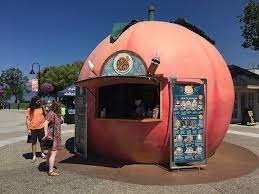
The Beach and The Peach
We passed Gyro and Veterans Memorial Park, with their already-inviting canopy of trees, as temperatures were heading north of 75 degrees. Noticing – just as Tim had illustrated for us – a sudden youth culture community, of all shapes, colours, sexes, and sizes…sitting, lying, walking, necking, running, toking, eating, playing guitar, and throwing frizbee, in a kaleidoscope of hippie-esque bliss.
We continued on, crossing Lakeshore Drive into Rotary Park where the soft white sands of Okanagan Lake Beach begin, and the denim, leather, and colourful tie-dyed caftans have been discarded in favour of bikinis and bathing suits. Skin abounds, and libidos have been dialed up. Music and marijuana floated on the breeze from assorted jam sessions, competing with the volume button of cassette decks scattered around the park. Sex, Drugs and Rock n’ Roll have invaded Rotary Park. “Shit, I didn’t bring my bathing suit,” said Mike, “Yeah, me neither, and I don’t think I’m going to strip down to my underwear here,” I said, “at least not till it gets dark.” “Let’s keep walking guys,” said Tim, “there’s a whole beach to check out, lots of babes – and you haven’t even seen The Peach yet.” “Ha ha! The Peach, yeah, we have to show Mike The Peach,” I said, “you can’t say you’ve been to Penticton, till you’ve kissed The Peach.” “What the fuck is The Peach?” asked Mike. “Oooh, you’ll find out soon,” I said, “follow Tim.”
Following the curve of the beach, and the curves of the bikini-clad girls, we rounded a corner, and there it was – The Peach – in all of its large, ball-shaped, faded, peach-coloured beauty. “Ha ha! It’s an ice cream stand!” said Mike, as Tim and I laughed. “Yeah,” I said, “and they make pretty good ice cream – I think I’m gonna have one.” We all bellied up to the serving window and ordered our favourite cones. “Mmm, Pralines and Cream, I love this stuff,” I said, as Mike & Tim slathered over their Chocolate and Strawberry. We decided to take a break and sat with our cones under the nearest shade tree and watched the human parade pass by.
Mike took me aside for a moment as Tim went to use the washroom, “Should we try selling our hash down here?” He posited, “seems to be the right scene for it.” “Yeah, I think so too,” I replied, “but it’s all in your backpack so we’ll have to wait till later when we get them from the church.” “Oh yeah, right,” he said, “maybe after we grab the packs and find a place to eat.” Just then, Tim came back from the washroom. “Hey Tim, any recommendations for a cheap place to eat? Do you go to the hostel?” “Hostel’s been closed, ‘cuz they’ve got staffing problems, and way too many hitchhikers,” he said, “I’ve been going to the Salvation Army ‘cuz I’m broke, and it’s cheap…but the food’s shitty and it’s kinda far away.” We all paused and pondered, while I nurtured a growing urge to eat Kentucky Fried Chicken, having seen Dinner Boxes advertised on a KFC outlet nearby for only $1.75.
We carried on down the beach, chatting, laughing, ogling, and rejoicing in our newfound teen freedom, all the way to the SS Sicamous – a paddle wheeler beached permanently as part of a heritage park, at the far end of the beach. Tim looked at his watch, and said, “Hey guys, it’s after 5, we should probably make our way back and get our stuff.” “Good idea,” we agreed. We turned and retraced our route – struggling to avoid a second ice cream cone – and foregoing Rotary Park for a quick right up Martin Street and the last four blocks to St. Andrews. It was quarter-to-six, and the Pastor was standing on the stoop waiting for us. “Ahh, there you boys are, I was getting worried,” he said, “just getting ready to call it a day.” He held the door for us as we strolled in and grabbed our packs. We all thanked him profusely, shook his hand, and wandered down the steps as he poked his head out the door and said, “God bless you three, and keep you safe!” We all turned, smiled, and waved as we headed towards Main Street.
“I’m hungry,” I said, “how about a little KFC?” Mike was willing but Tim hesitated, and said, “I was thinking of doing a little panhandling before dinner, but maybe I could meet you guys after.” I looked at Mike and said, “Hey Dude, Mike and I can buy you a little KFC. We can getcha one of those dinner boxes, they’re only like a buck seventy-five.” “Oh, thanks man,” he replied, earnestly, “I am pretty hungry, and I never know how long it’ll take me to collect a couple of bucks,” and then quipped, “you Presbyterians are the best!” To which we all laughed, “That’s the first time I’ve been in a church since Sunday School!” I replied, laughing. We wandered into the KFC and sat down at three window seats with our three Dinner Boxes and feasted.
Post repast, as Mike and I prepared to meander back to the park with our perilous fantasy of selling some of our questionable hash to unwitting customers, Tim said, “Hey guys, thanks a lot for the KFC, I gotta go meet my buddy Allan at the liquor store, we’re doing a little panhandling there so I gotta head out…gotta make enough for breakfast! Maybe see you at the beach tomorrow!” “OK man, good luck!” I replied as we parted company.
The sun was slowly creeping lower in the cloudless sky, but it was still quite hot, so most of “the scene” had gravitated to Gyro Park, where the deciduous trees offered cool relief, and a small group of acoustic musicians had taken over the Bandshell for a free concert. A few mobile food stalls, selling burgers, fries, and cold drinks were parked on Main to take advantage of the large group of hungry teens and 20-somethings wandering between Gyro, Memorial, Rotary, and the beach.
We plunked ourselves within earshot of the Bandshell, so we could hear the music and be closer to “our market.” This feels like the best place we’ve seen to try and unload some of this stuff,” said Mike, “what’re we gonna call it? It’s not Blonde and firm like Lebanese, or black and oily like Afghani.” “It’s kinda red and crumbly,” I said, “and probably smells like snuff, or whatever that dickhead gave us.” “How about just Moroccan Red?” laughed Mike. “Yeah,” I giggled, “let’s blame it on the Moroccans!” We both pondered this and agreed that that would be the name for our product launch, now we had to come up with a marketing campaign. “What about, you stand up and shout, ‘Hey everybody! We’re selling hash!’” suggested Mike, breaking into fits of laughter. “Ha ha! Sure!” I said, “I can just imagine the rush of customers followed shortly thereafter by severe beatings.” “If people complain, we just give ‘em their money back,” suggested Mike. “Yeah, sounds good,” I concurred, “let’s just wait till it gets a bit darker.”
It wasn’t legal to drink or smoke pot in the park, but that didn’t stop this large group of young party-minded kids. It was Penticton in summertime – one of BC’s premier “fun in the sun” destinations – and no one could remember where the off switch was located. The sun set over the western range, bottles came out of backpacks, joints were fired up, the band turned it up to “11,” dancing ensued, and those who were not already well-supplied began their search for intoxicants.
A scraggly-bearded teen stood up near us and said – rather loudly, to those sitting nearby – “Anybody got any pot?” ‘Hmm, who needs a marketing campaign?’ I thought. “Yeah, we’ve got a bit of hash,” said Mike. “Great,” he said, walking over towards us, “how much for a gram?” “Just five bucks,” said Mike, pulling out his little baggie of tinfoil wrapped hash. While this transaction was going on, another young guy approached us, “Did I hear that you guys’ve got hash?” “Yeah,” I said standing up and pulling out my small stash, “Just five bucks.” Word seemed to spread quickly, and soon Mike and I were doing a fairly brisk business, as faces appeared out of the dark and commerce took place.
Somewhere within the flow of money coming in and little tinfoil wrapped packages going out, a bearded hippie-kid emerged from the crowd and approached Mike to make a purchase. Their deal seemed to take a little longer than others, and when he turned and left, Mike came to me and said, grinning, “Dude, I just sold a gram of hash for two hits of Blotter Acid!” as he held out his hand showing me two tiny pieces of paper within a folded piece of wax paper. “C’mon, let’s do this!” he said, while placing a hit on his tongue.
I had only done acid once before, and did not have fond memories of the experience. Seven or eight hours careening an out-of-control locomotive, while wrestling with intense physical, emotional and visual hallucinations, and bouts of paranoia, did not leave me with that “gotta do that again soon” kinda feeling.
How quickly we forget. I paused for a moment, then reached over and grabbed the Blotter between thumb and forefinger and popped it in my mouth – second time lucky? I took a deep breath and steeled myself.
“This is gonna be crazy,” said Mike, “I haven’t done acid since last summer. Do you remember that time on the beach in Victoria?” “Yeah, don’t remind me,” I said, “did you have a good trip?” “Ha Ha, no,” he said, “way too intense, but I’ve been wanting to try it again. I think we had bad shit last year, and this guy just told me that this was good stuff.” “Yeah, just like our hash is good stuff,” I said. “Hmm, good point,” said Mike, thoughtfully, “well, it can’t be worse than last year. That was intense!” “Yeah, I guess we’re going to find out,” I replied, unconvinced.
After the initial enthusiasm, our little business traffic had died down, and we were left dealing with the occasional word of mouth customer. We’d both sold 6 or 7 grams each, out of the stash of 27 we’d brough along for the trip, so were feeling pretty good about our decision – and already counting the additional $30ish dollars we’d made, each, for travel expenses.
It was a dark and warm Okanagan evening, and the party in the park showed no signs of abating, but I was beginning to feel apprehensive. It had been half an hour since we consumed our acid, and I could feel the roller coaster making a slow climb up the first hill. “Are you feeling anything?” I asked Mike, “Yeah,” he replied, breathing deeply and turning sideways to give me a wary grin. Great, I thought, here we go.
Just then, a recent customer walked towards us, with determination and a frown on his face, “Hey,” he said, holding out his hand with an open piece of tinfoil and hash, exposed in his palm, “this stuff is shit.” “Huh?” I replied, turning to face him as my apprehension and body chemistry continued fighting for supremacy. “I think you’ll have to speak to our Quality Control Manager,” I replied, trying to elicit a smile – to no effect, “uhh, Mike?” “Oh, hi,” said Mike, “No, not high at all,” came the displeased hippie’s reply, “this is bad hash, I don’t know what it is.” “Uhh, it’s Moroccan Red,” Mike replied timidly, eyes starting to glaze over, “yeah…, it’s a different kinda high, sorta mild,” he continued, in a vain attempt at persuasion. Realizing the futility of this effort, he said, “Uuh, sorry you don’t like it dude – here, I’ll give you your money back,” pulling a crumpled blue Sir Wilfred Laurier out of his pocket and exchanging it for the returned item.
Mike and I looked at each other. “That was a bit edgy,’ I said, “I sure hope we don’t get a lot of angry returns, I’m getting pretty high,” as I licked my dry lips, and took a deep breath, with eyes darting around the dancing darkness. “Yeah,” came Mike’s voice, sounding far away, though he was standing nearby. As my ears crackled and adjusted to this altered audio reality, a stranger came towards us and said in slow motion, “Hi, I heard you guys might have some hash for sale?” Mike picked up on this first and said, “Yeah, five bucks a gram,” as he fumbled for more product from his baggie. This was followed by a previous purchaser and his girlfriend, who approached us smiling and said, “Hi, we bought a gram from you guys earlier, and really like the high…kinda mild, but doesn’t mess you up. Do you have any more for sale?” Slightly taken aback by this request, I hesitated for a moment, conjured a smile onto my anxious face, and did the new transaction – mystified and tripping, as the happy customers wandered back into the crowd.
“That was weird,” I said to Mike, “someone actually liked our hash.” “Yeah, totally weird,” he replied, “maybe it was their first time.” As we discussed this new twist, another angry dissatisfied purchaser came up demanding his money back. This time, neither of us tried to explain anything, we were getting too buzzed – so a quick intake at the Return Counter, filling out the proper forms and a return of purchase price. As our emotional states and fortunes were rising and falling with the mood of our clients, a bearded face that we hadn’t seen previously loomed out of the darkness and said in a low raspy voice, “You guys better be careful, there are Narcs and undercover cops in the park, busting guys for possession – you’d get in deep shit if they caught you dealing.” Now, as I added paranoia, onto my crippling mix of anxiety, and altered senses, a young woman emerged from the crowd and said sweetly, “Hi, I hear that you guys are selling hash.” I was starting to feel like an aardvark on a freeway – from a different world, moving at a different pace while my emotional roller coast tried to decide if it was doing the slow climb up to fearful new heights, or getting ready to plunge screaming down the hill around the breakneck curve. It didn’t, however, prevent me from making this one last sale before I turned to Mike and whispered, “Dude, I think we gotta get outta here…we’re either going to get beaten up or busted by Narcs, I’m way too high for this.” “I’m with you,” said Mike, exhaling and licking his lips, “let’s split.”
We shouldered our packs and wandered – as inconspicuously as possible – out of the park and away from the scene, dialing down the intensity with every step that took us further away from Gyromania.
“What’re we gonna do?” asked Mike. “I dunno dude,” I said, “let’s head up Main Street and stick out our thumbs and see what happens.” It was 11 o’clock and we were at least 3 hours into this 7- or 8-hour trip from which we could not escape. Main Street wasn’t much more calming, the street had been turned into a drag strip for drunken youths, who hung out their windows grinning, looking for girls, and yelling at passersby, and the sidewalks were full of locals and transients milling about searching for some kind of scene. We continued to walk, keeping a low profile and waiting for an opportune moment and place to stick out our thumbs. As the downtown core thinned out, we found a spot and started hitchhiking. Spotting a garbage can nearby, we decided to get rid of our “merchandise” at the urging of the acid and paranoia within. There was still a fair bit of heckling from drunken greaseballs and jocks driving by, giving us the finger, and laughing, but finally an old ’52 GMC pickup pulled over driven by two sullen 30-something hippies, with a couple of other transient-looking teens riding in the back. “Where you goin’?” we asked, “Heading to Keremeos,” said the front seat passenger, “Great,” I said, “can we join you?” “Hop in,” he replied. We threw our packs in the back next to the other transient kids, and climbed in.
With a certain amount of control and effort, we introduced ourselves to the kids we’d be sharing the ride in the open cargo bed with. Frank and Ted also seemed a bit withdrawn but managed to explain that they were working on a commune outside of Keremeos – for room and board – that was basically run by Al and Darcy, the sullen driver and his companion. After these brief intros, we all withdrew into ourselves as the wind, and noise from the truck made conversation awkward.
The lights from Penticton competed with the starry night and the ascendant moon, for our attention, while internally, the silent battle between serenity and anarchy raged on. Luckily, the forces of control, acceptance and peace seemed to be gaining the upper hand. While my inner voice said, “C’mon, only 3 or 4 more hours, you got this.” And then, unexpectedly, the driver chose not to follow the familiar highway south to Keremeos – but hung a hard right onto an alternate route called Green Mountain Road, a route I’d never heard of. Forces of control, acceptance and peace down, paranoia up. “Where’re we goin’? I asked. “Green Mountain Road…it’s a shortcut to Keremeos…real pretty and quiet…hardly any traffic,” said Frank. “What’s up with Al and Darcy?”, I asked, “they don’t seem super friendly.” “They came up today, bringing vegetables from the commune to sell at the Farmer’s Market but didn’t have a good day,” said Ted, “too much competition and too many people at the beach – no one was buying.” “And then Ted and I dropped some acid at the concert at Gyro Park and they’re kinda pissed at us,” said Frank. Mike and I both looked at them, giggled nervously and said, “No shit! We must’ve done the same acid…we’re just baked!” They both laughed and said, “Yeah, we’re tripping – Al and Darcy are pissed because we’re gonna be useless at the commune tomorrow.” We all leaned back against the walls of the cab to absorb this new info, and then slowly retreated into ourselves. The warm summer air washed over us, and the only noise we could hear was the shifting of gears as the Chev slowly climbed out of the valley and up the slopes of Green Mountain.
After an hour of Green Mountain Road meditation, we finally descended into the Similkameen Valley, near Olalla enroute to Keremeos. We asked to be dropped off downtown – back on the Crowsnest – so we could figure out our next move, which did not seem to be sleep, given the trajectory of our high. We said goodbye to Frank & Ted and waved at Darcy and Al who waved back. Packs assembled, and boots on ground, Mike turned to me and asked, “How’re you doin’ man?” I’m still pretty high, how about you?”, I replied. “Yeah, I think it’s about 1:00am so got a couple more hours…I hate this shit, don’t ever let me buy acid again.” We both chuckled. “OK, I’ll keep an eye on you – I don’t like these trips either…too intense and too long…let’s walk.”
We wandered east, along the number 3. Traffic was thin given the hour, but it didn’t matter as we weren’t hitchhiking, we were searching for a place to crash. It was dark, but the moon cast a considerable glow, so our route was well-lit. Since receiving irrigation in the 50’s, Keremeos and Cawston have been renowned for their Fruit and Berry growing, even receiving recognition as the Fruit Stand Capital of Canada. If we weren’t so stoned and completely lacking hunger, we would likely have stopped to relieve the trees of some of their fruit. As it was, the local farming economy was so robust and in-season, we were having difficulty spotting any vacant or abandoned buildings to sleep in.
“I dunno man,” said Mike, after we’d walked for about an hour and were now on the western edge of Cawston, “I’m getting’ kinda tired, maybe we should just sleep in a field or something.” “Yeah, me too,” I said, “how about an orchard? bit more privacy.” We agreed on this and started scanning to the left and right sides of the road for a nice little orchard with good-sized fruit trees, so we could just lay our sleeping bags out and rest – without being too exposed as we would be in an open field.
Within short order, we found our perfect little sleeping spot. An apple orchard with 15-foot-high trees and a good canopy. We chose the middle row and walked in 200 feet or so, took off our packs, removed our sleeping bags, folded our towels into little head rests, then removed our runners, and crawled into our sleeping bags and fell into a deep sleep.
And this would’ve gone swimmingly well, if the irrigation system hadn’t kicked in around 3am. Tsst-tsst-tsst-tsst-tsst-tsst came the sound of irrigation heads coming to life and beginning their nightly task of spinning and shooting their life-giving water to the ever-thirsty apple trees. If we didn’t wake immediately to the recognizable tsst-tsst sound, the cold splash of water falling on our faces was enough to make Mike and I rouse and say, “Shit!” together, and then struggle out of our slumber to feverishly assemble our possessions, and then run, laughing hysterically amidst the sprays of water, as we searched for the quickest way out.




























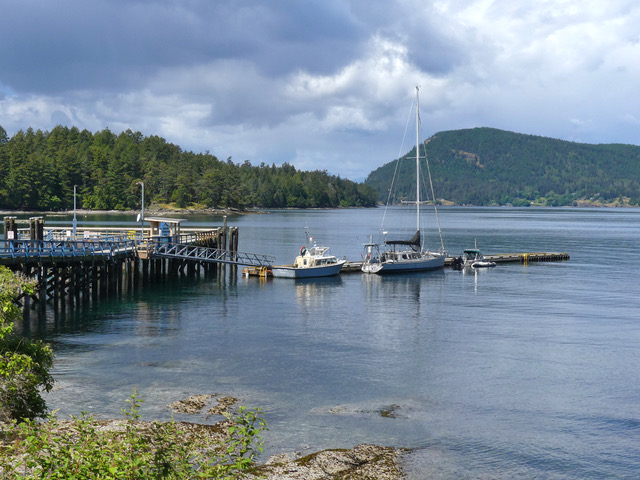



















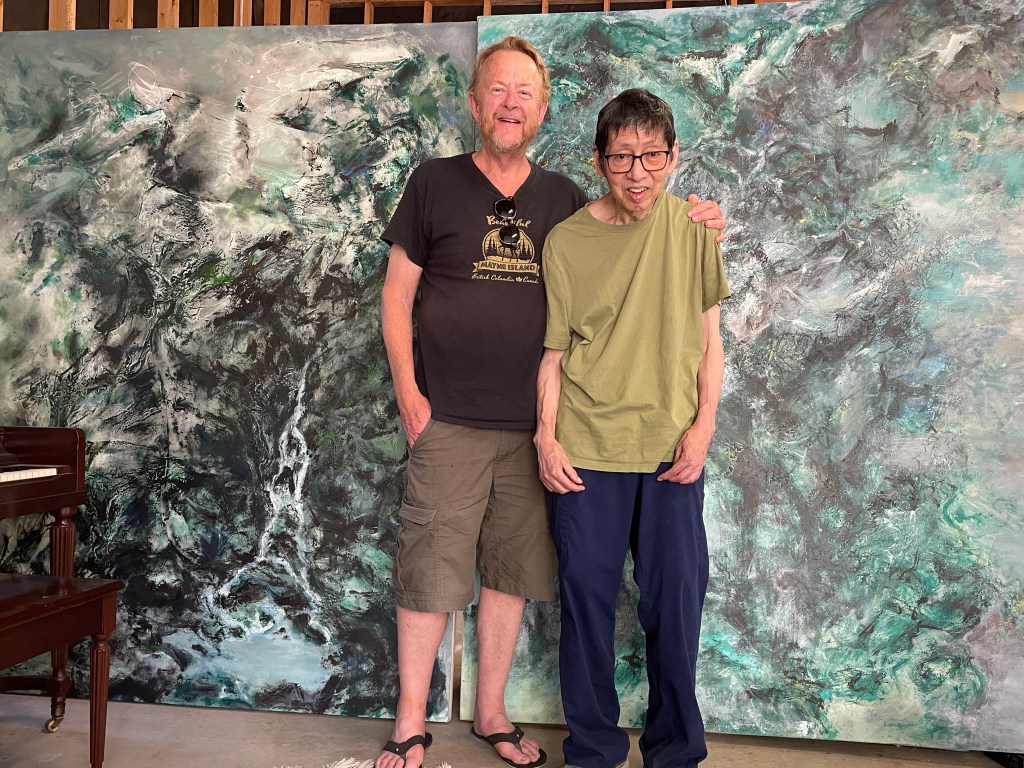




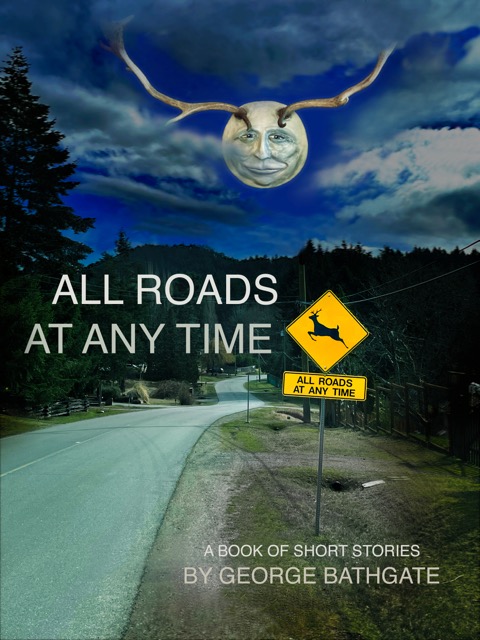
 Clay & Bone